
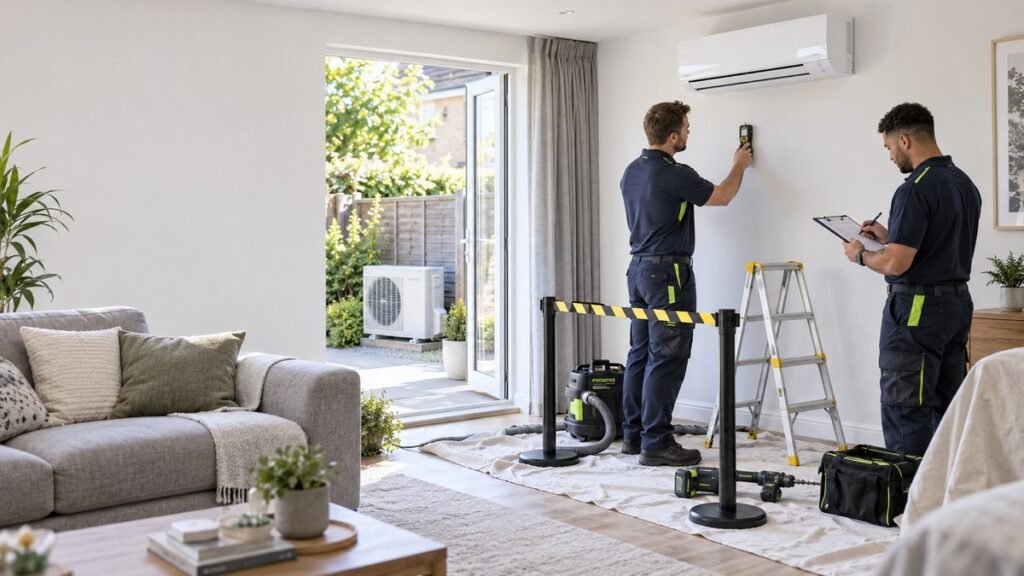
Domestic installations combine construction work, occupied-home risks, electrical work, pressurised refrigerant systems, work at height, drilling and heavy equipment. Safe work depends on planning the whole job and applying stop-work rules when the facts differ from the plan.
What you will cover
- Course boundaries, regulated qualifications, practical competence and employer authorisation.
- Job surveys, construction planning, asbestos uncertainty and concealed services.
- Protecting occupants, children, pets, property and escape routes.
- Access selection, drilling controls, dust, noise, vibration and manual handling.
- Electrical isolation, refrigerant identification, pressure testing and hot-work controls.
- Commissioning, records, customer handover and safe close-out.
Course structure
Complete ten lessons followed by a course-level 12-question final assessment. The pass mark is 80% (at least 10 correct), and retakes are permitted.
Competence boundary: this course builds safety awareness only. It does not teach the technical installation method, confer F-gas or electrical qualifications, prove practical competence, or authorise anyone to work. Use it with the company SSOW, a proportionate construction phase plan, task risk and COSHH assessments, current manufacturer instructions and the job-specific pre-start plan.
 Certify Pro