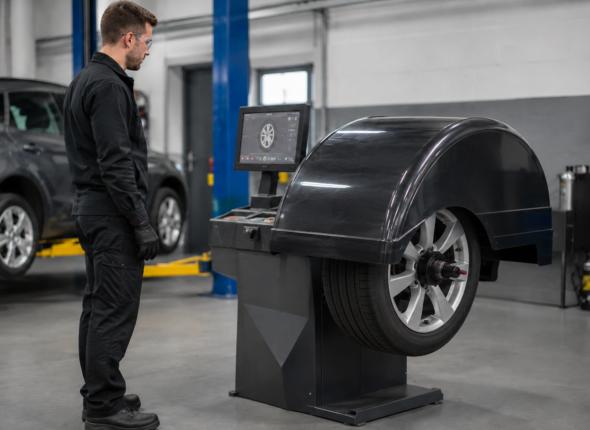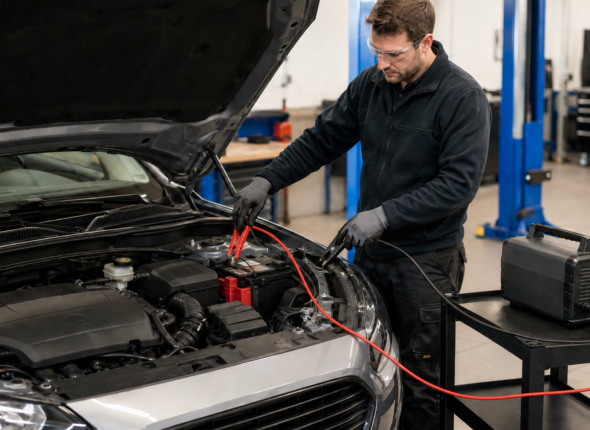

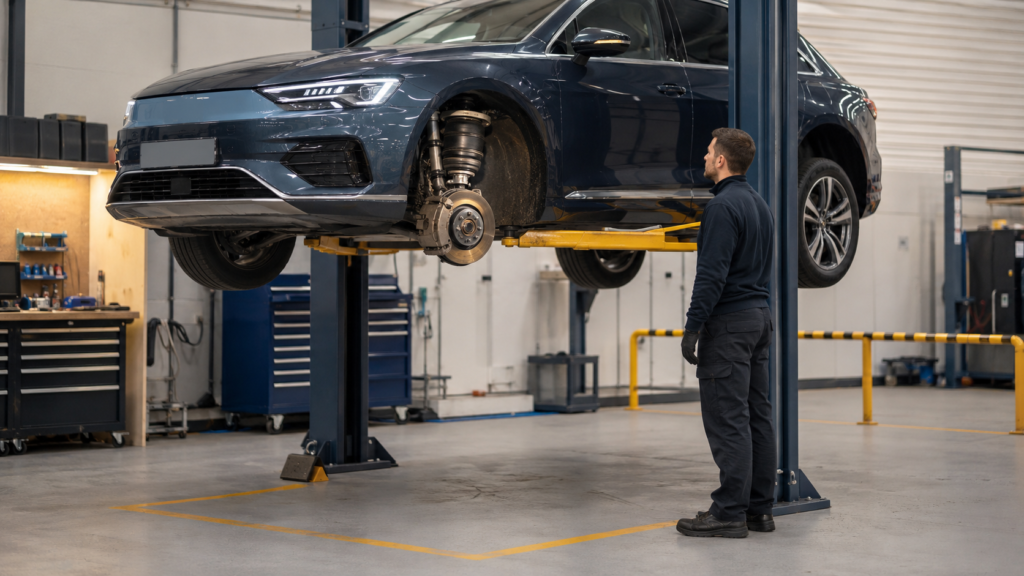
Vehicle air suspension can lower a chassis, raise a vehicle or move an axle without warning. It may also retain hazardous pressure in air springs, reservoirs, valves and lines after the engine is stopped.
This practical awareness course helps vehicle technicians, tyre fitters, recovery personnel and workshop supervisors recognise crushing, trapping, stored-pressure and component-ejection hazards. It explains how physical support, service mode, depressurisation and isolation work together without treating any one control as a universal solution.
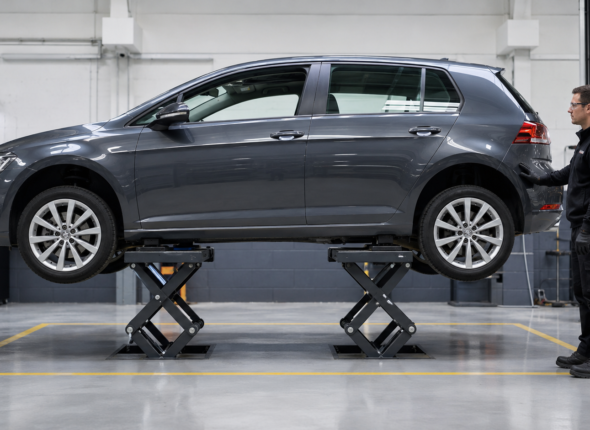
Learners follow the decision-making sequence from vehicle identification and work-area control through lifting, wheel and component tasks, roadside limits, leak testing and controlled return to service.
Important: This is an awareness course. It does not by itself authorise practical air-suspension work or prove competence on a particular vehicle. Current manufacturer information, the workplace risk assessment and safe system of work, practical familiarisation and written employer authorisation still apply.
Approximately 50 minutes. Includes eight substantive lessons, a 10-question assessment and a Certificate of Completion. Recommended refresher: every 12 months, or sooner after relevant change, incident, near miss, unsafe observation or prolonged non-use.
 Certify Pro